Key takeaways
- Power off at the breaker and a licensed electrician to disconnect a hard-wired spa, before any cutting.
- The order: drain, cover off, cabinet panels off, equipment out, shell cut into sections, frame out, load and haul.
- Blades: carbide grit for the fiberglass and acrylic shell, a carbide-tooth demolition blade for the wood frame and screws. Carry spares.
- Wear eye, skin and breathing protection. Fiberglass dust irritates the eyes, skin, nose and throat (ATSDR).
- Size the pieces to your dump's rules before you cut. Phoenix wants quarters; King County caps most stations at 2 × 2 × 2 ft and under 200 lb.
- Professional removal runs $150 to $800 (Angi). Ours is from $349, with disposal included.
Removing a hot tub yourself is demolition, not plumbing. The tub doesn't come out whole. You take it apart in a fixed order and cut the shell into pieces you can carry and your local dump will take. This guide covers each step, the tools and blades, how to cut a hot tub up, where the pieces can go, and what it costs compared with hiring someone. The same steps apply to spa removal and jacuzzi removal, whatever the brand.
For the short version of the order and why it works, see how a hot tub is cut down. This page goes deeper, with the tools, sources and numbers.
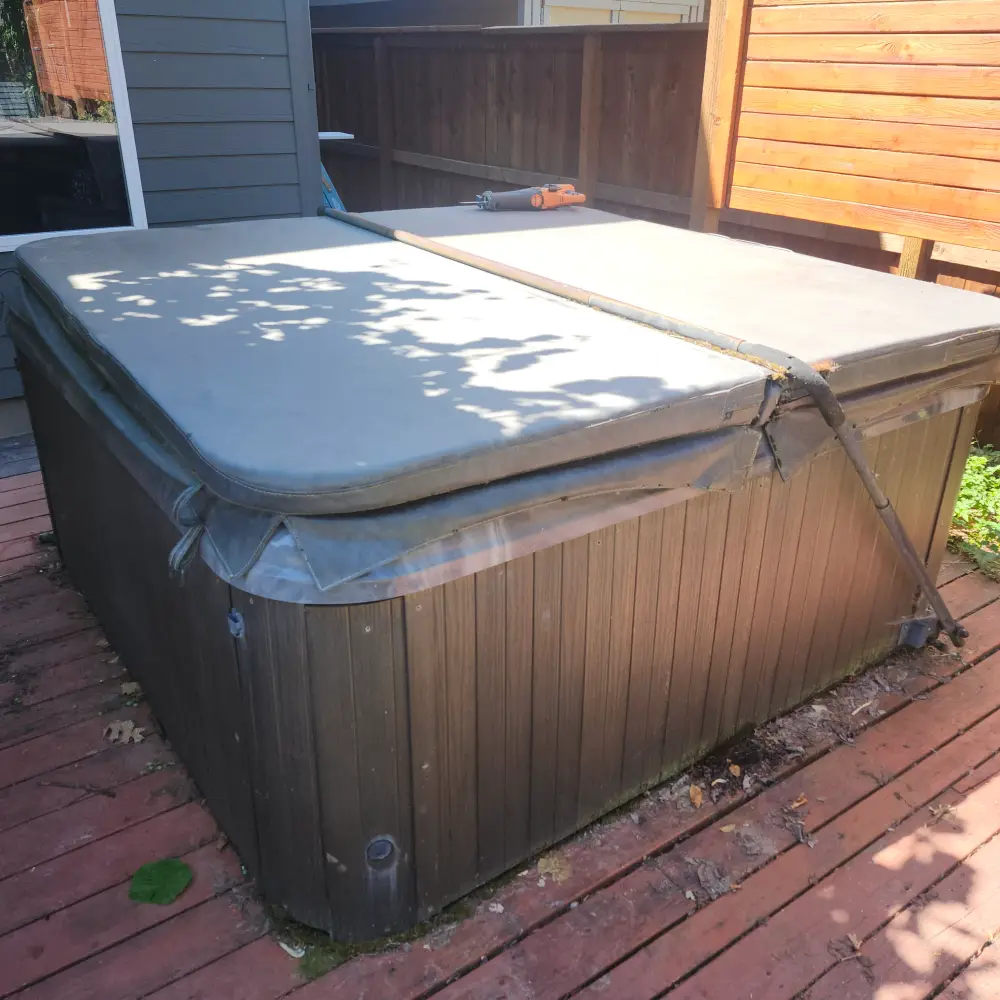
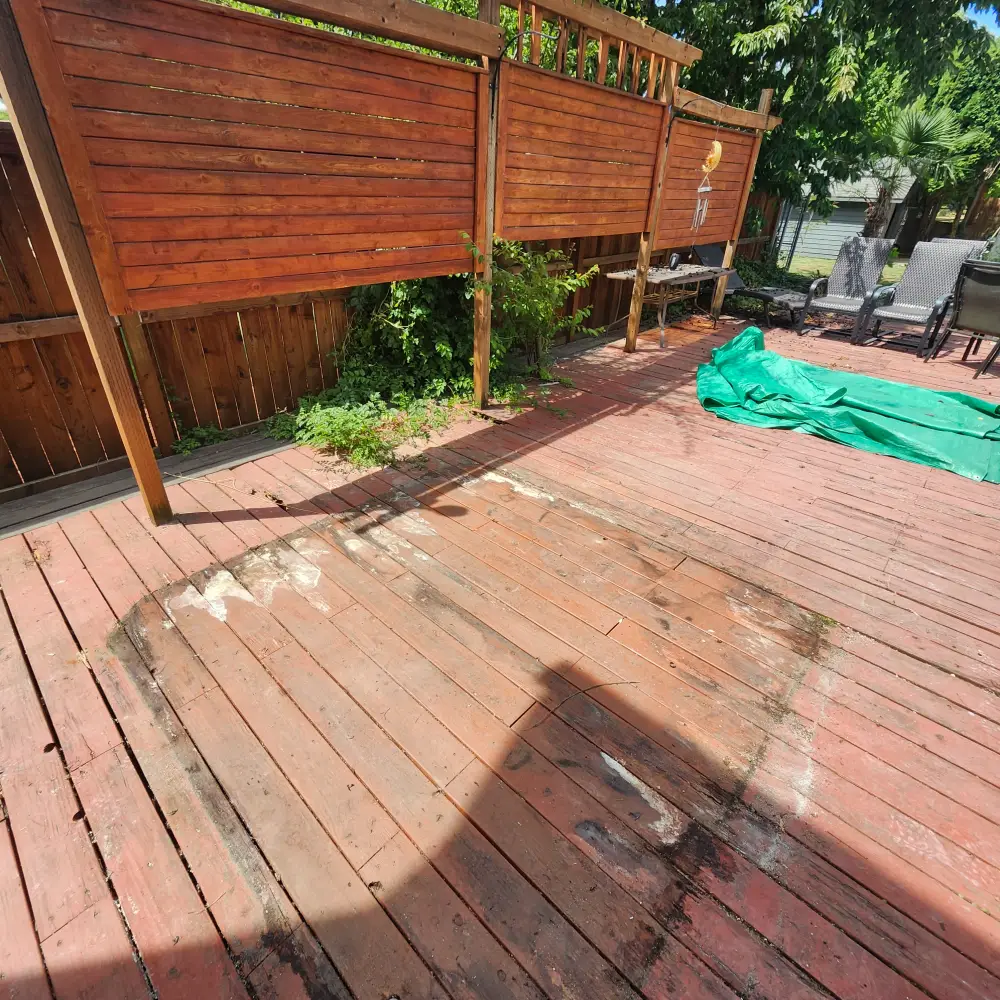
Safety first
Electrical: why a licensed electrician disconnects it
A full-size spa is usually hard-wired to its own circuit. Hot Spring's 230V spas need a dedicated 50 amp breaker in the main panel and a GFCI subpanel at least 5 feet from the water's edge. You're about to cut through a cabinet that holds the control box and its wiring. That circuit has to be dead and properly disconnected first.
- Turn the spa off at the breaker. The switch on the spa controls the spa, not the supply.
- Have a licensed electrician disconnect it and make the circuit safe. Many jurisdictions treat capping or removing the circuit as permitted work. See do you need a permit?
- A 120V plug-in spa only needs unplugging.
- If the spa has a gas heater, the gas line must be capped by someone licensed for gas work.
More detail: hot tub disconnect requirements.
Protective gear, and why
Cutting a hot tub throws fiberglass dust, acrylic chips and crumbs of spray foam everywhere. ATSDR, the federal toxic-substances agency, says airborne glass fibers can irritate the eyes, nose, throat and lungs, and that skin contact can irritate the skin. It says these effects are reversible and go away after exposure stops. Its advice for do-it-yourselfers handling fiberglass insulation is to wear protective clothing, respiratory protection and eye protection.
- Eyes: sealed safety goggles, not just glasses. Chips fly up from the cut.
- Lungs: a NIOSH-approved particulate respirator, fitted properly.
- Skin: long sleeves, long pants and gloves. ATSDR also says to shower and change before you go indoors, and to wash work clothes separately.
- Ears: hearing protection. A reciprocating saw in an acrylic shell is loud.
- Feet: boots. Cut pieces drop, and the frame is full of screws.
Lifting: size pieces for people
NIOSH's lifting guidance puts the maximum two-handed lift, under ideal conditions, at 51 pounds. Real lifts, with awkward shapes and reaches, are less. NIOSH adds that team lifting can cut the load each person carries in half. So plan the cuts around who's carrying them. A Hot Spring Grandee weighs 790 lb dry, and a quarter of that shell, frame and foam is still a two-person carry or more. Use a hand truck or dolly for the heavy pieces, and don't carry anything you can't see past.
Saws
Use a corded or high-capacity cordless reciprocating saw, and let the blade do the work. Keep both hands on the saw, cut away from your body, and support the piece so it doesn't pinch the blade or drop on your feet. A reciprocating saw is the usual tool because it follows curves and works in tight spots.
Tools for DIY hot tub removal
| Tool | What it's for | Notes |
|---|---|---|
| Reciprocating saw | Every cut | The one essential power tool |
| Carbide grit blades | The acrylic and fiberglass shell | Lenox lists fiberglass among its carbide grit blades' applications. Fiberglass dulls ordinary blades quickly, so buy several. |
| Carbide-tooth demolition blades | Wood cabinet, frame, screws, PVC | Milwaukee lists wood with nails, deck screws, Schedule 40 pipe and PVC for its 6 TPI WRECKER. Its 5 TPI wood-with-nails blade suits the frame too. |
| Drill/driver and bits | Cabinet panels, corner trim, frame screws | Unscrewing is faster and cleaner than cutting where you can |
| Pry bar | Clipped panels, a glued base pan | A flat bar and a longer wrecking bar |
| Submersible pump and hose | Draining when the gravity drain is slow or seized | See how to drain a hot tub |
| Wet/dry shop vacuum | Water left in the footwell and lines; foam crumbs | Some water always stays in the plumbing |
| Tarps and contractor bags | Catching foam and dust | Foam fragments are the biggest mess a removal makes |
| Protective gear | Eyes, lungs, skin, ears, feet | As above |
| Hand truck or dolly | Moving heavy sections | Pneumatic tires for lawn and gravel |
| Truck or trailer and straps | The dump run | Tarped and tied. Many facilities charge for unsecured loads. |
How to remove a hot tub, step by step
1. Disconnect the power
Breaker off, then a licensed electrician to disconnect a hard-wired spa, as above. Do this before removal day, not on it.
2. Drain it
Open the drain valve or drop a pump into the footwell, and send the water where your city allows. That's usually the sanitary sewer through a clean-out, not the storm drain or the street. Our draining guide covers the methods and the local rules. Then vacuum out the footwell. Water stays in the lines and comes out as you cut, so expect it.
If the tub froze full, wait for it to thaw. A frozen spa is one solid block and isn't safe to cut.
3. Take off the cover, steps and accessories
Lift off the cover and any cover lifter, steps and handrails. They're separate items for disposal. A waterlogged cover is heavier than it looks, so lift it with two people.
4. Cabinet panels off
The skirt panels are usually screwed or clipped to the frame. Remove the corner trim first, then the panels. With the panels off, you can see the frame, the foam and the equipment bay. Unscrew what you can; cut only what won't come loose.
5. Pack out the equipment
The pumps, heater, blower and control box (and an ozonator, if fitted) come out as units. Cut the PVC lines a few inches from each component and unbolt them from the floor of the bay. Keep the metal separate from the shell. Pumps, motors and the heater are the recoverable scrap. See scrap and recovery.
6. Cut the shell into sections
This is the main job, covered in detail below. The shell is the last major cut because, until then, it's what holds the spa together.
7. Frame and base out
With the shell sections gone, the wood frame comes apart in a few pieces, unscrewed or cut with the demolition blade. Many spas sit on a base pan that's glued, not fixed. It holds the last of the water and won't come off the way the panels do. Pry it up and cut it if you have to.
8. Load and haul
Load the heaviest pieces first, over the axle. Tarp the load and strap it down. Facilities charge for loose loads: Phoenix's transfer stations add $20 for an unsecured load, King County $25, and Yolo County $15 for an untarped one. Then sweep the pad. The foam gets everywhere.
Rather not deal with it? We remove hot tubs from $349 — cut-down, haul-away and disposal included.
Get a hot tub removal quote ↗How to cut up a hot tub
Plan the pieces before you cut
Three things set the size of each piece. The first is your disposal site's rules: call and ask before you start. The second is the narrowest point on your route out, often the side gate. The third is what two people can safely carry. Then plan the cuts on the shell.
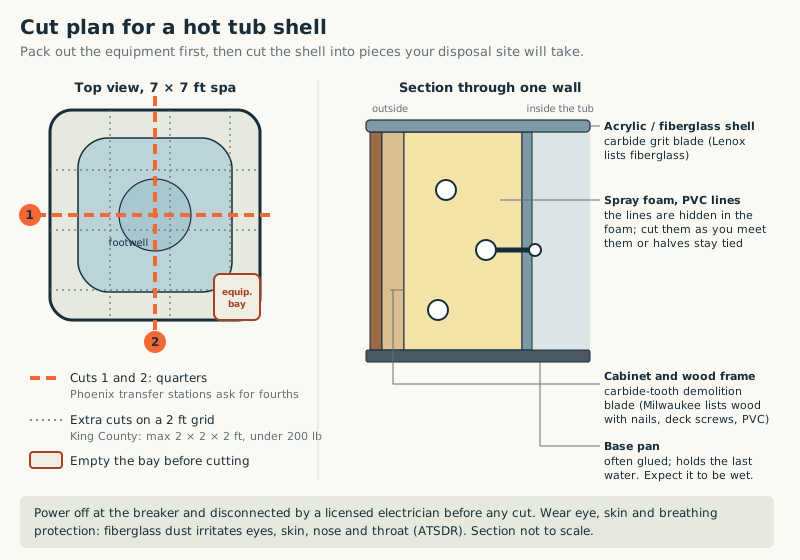
The cuts
- Mark the lines. For quarters, two cuts at right angles through the middle, avoiding the empty equipment bay corner. For smaller pieces, add cuts on a grid.
- Start at the lip. With a carbide grit blade, plunge or start at the top edge and cut straight down through the acrylic, the foam behind it and the cabinet. Work down one side of a line, then the other.
- Cut the hidden lines. The PVC water lines run through the foam and stay hidden until the blade hits them. If you skip them, two "halves" can stay tied together by pipework. Feel for resistance and cut through each one.
- Cross the floor last. The footwell and seats are the thickest, most curved part. Cut them once the walls are free, so the piece doesn't fold onto the blade.
- Support each piece. Have a helper hold the section, or block it, so it doesn't drop as the cut finishes.
- Swap blades when they slow down. A dull blade burns, binds and kicks.
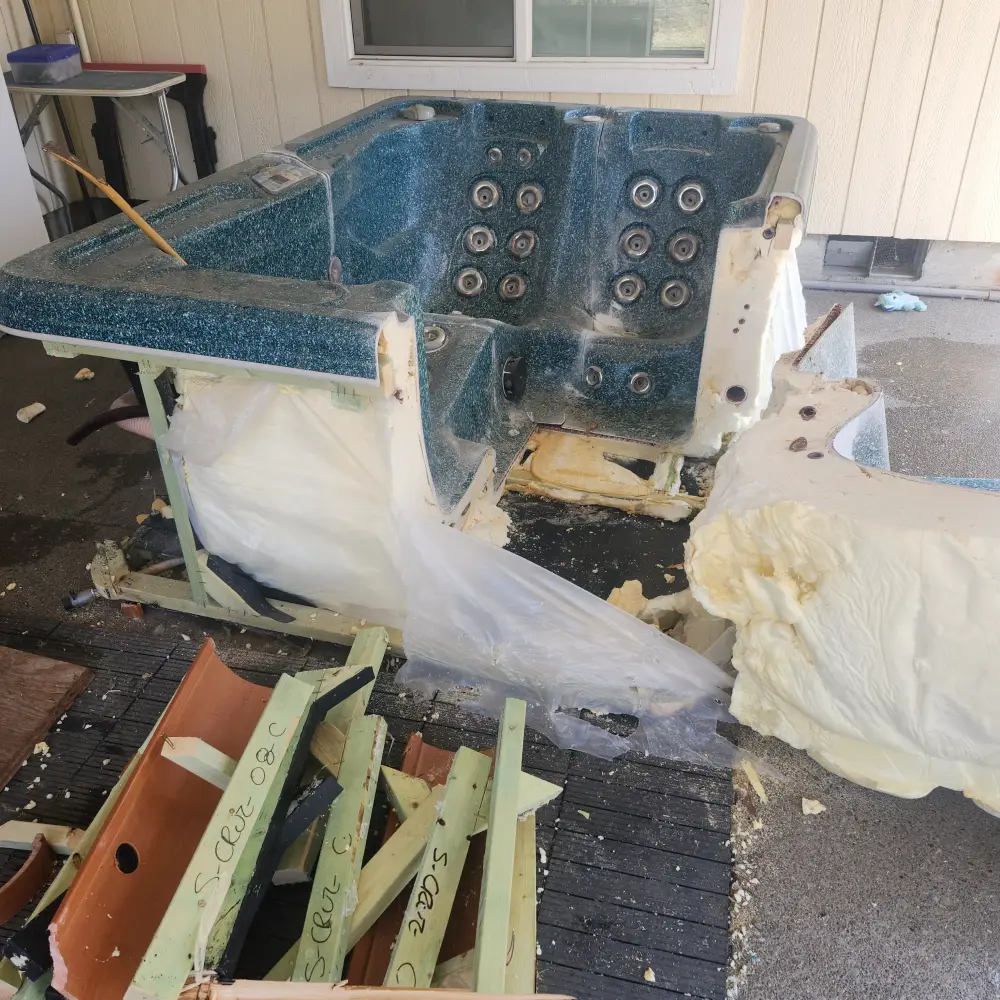
Mistakes to avoid when cutting
- Cutting before the power is disconnected. Never.
- Cutting through the equipment bay. Pack it out first. Blades and pump housings don't mix, and that's your scrap metal.
- One blade. Bring several of each kind.
- Pieces too big for the dump. Re-cutting at the scale house isn't an option. Ask first.
- No dust control. Tarps under and around the tub, and a respirator on.
- Burning the scraps. Don't. Haul them.
Where to take the pieces
A cut-up hot tub is bulky waste. Acceptance, size limits and fees are set facility by facility. Our guide to getting rid of a hot tub covers every option, including selling, city pickup and scrap. Here's what a few facilities in our city guides publish:
| Facility | Rule for hot tubs | Published fee |
|---|---|---|
| 27th Avenue and North Gateway transfer stations, City of Phoenix, AZ (Phoenix) | Spas accepted cut into fourths, or a $50 penalty. Asks for registration or title to prove ownership. | $55 a ton, $40 minimum |
| Dem-Con Shakopee Landfill, MN (Shakopee) | Hot tubs named on the public price list | $80 per hot tub, plus tax |
| Dem-Con Blaine Transfer Station, MN (Blaine) | Hot tubs named on the public price list | $125 per tub, plus tax |
| Yolo County Central Landfill, Woodland, CA (Woodland) | Hot tubs listed as oversized items | $135 a ton |
| Recycle City, City of St. Peters, MO (St. Peters) | Hot tubs accepted at the walk-in drop-off | $125 minimum (to 2,000 lb) plus $25 per hot tub, plus landfill tax |
| Prince William County Landfill, VA (Dale City) | Hot tubs listed, for county residents | $45 a ton |
| King County transfer stations, WA (Renton) | At most stations, pieces no bigger than 2 × 2 × 2 ft and under 200 lb. Whole tubs or larger pieces go to Bow Lake or Factoria. | Renton: $40.25 minimum, $243.38 a ton |
| Athens-Clarke County Landfill, GA (Athens) | Not accepted: hot tubs are listed as construction and demolition material, which it doesn't take | n/a |
Fees as published by each facility and collected for our city guides. They change, and taxes and surcharges apply. Confirm before you go.
For how per-ton pricing and minimums work on a small load, see C&D tipping fees. And check whether your city will pick one up.
How long does it take, and what does DIY cost?
HomeGuide says a professional removal takes 1 to 2 hours for small hot tubs and 3 to 4 hours for larger units. A first-timer should plan on longer, plus the drain, the dump run and cleanup.
| DIY | Hiring a removal company | |
|---|---|---|
| Electrician | Needed for a hard-wired spa | Needed for a hard-wired spa |
| Tools and blades | A reciprocating saw, several grit and demolition blades, a pump, protective gear | Theirs |
| Truck or trailer | Yours, borrowed or rented. HomeGuide puts a dumpster at $280 to $500 a week. | Theirs |
| Disposal | The dump fee, from $80 a tub to per-ton rates with minimums (table above) | Ask whether it's included |
| Labor | You plus at least one strong helper | Angi: $100 to $200 an hour where it's billed hourly |
| Total | Low if you own the gear; adds up fast if you don't | Angi: $150 to $800, average $400. HomeGuide: $200 to $600. |
Across 71 removal companies that publish a hot tub price, the median advertised starting price is $350. See hot tub removal cost for the full comparison.
Special cases
Our edge cases page lists what changes the job. Here's what each one means if you're doing it yourself.
Deck-sunk hot tubs
If the deck boards run over the spa's lip, some of the deck has to come up before the shell can come out. Unscrew the boards around the opening and keep them if you'll patch the deck. Then cut the shell out in place, in smaller pieces than usual, because you're lifting them up and out of a hole. Check the framing that carried the tub before anyone stands on the patch. Partial demolition of a structure may need a permit. Phoenix, for one, requires a demolition permit before any total or partial demolition of a structure, with debris cleared within 60 days.
In-ground hot tubs
Angi says removing an in-ground hot tub takes drilling, sawing and a lot of extra time, and puts the cost at $400 to $1,100, against $250 to $500 for an above-ground tub. Removing the shell from a concrete vault leaves a hole. Filling, compacting or covering it is usually a separate job, and possibly a permitted one. Ask your building department before you start.
Indoor hot tubs
Every piece has to fit through the doors, round the stair turns and across finished floors. Cut smaller sections than you would outdoors. Dust control matters more indoors: seal the room with plastic, cover the floor, and ventilate. Hot Spring notes indoor spas raise humidity and need plenty of ventilation, so check for water damage under and around the tub once it's out.
Swim spas
A swim spa is a much bigger job. Bullfrog's S200 measures 17 ft × 7 ft 10 in × 4 ft 4 in and weighs 2,720 lb dry, more than three times a 790 lb Grandee. Some have two zones and two equipment packs. Expect many more sections, more blades and several dump loads.
Jacuzzi removal: is a jacuzzi-style hot tub any different?
No. Jacuzzi is a brand name, but many people use "jacuzzi" for any hot tub. A jacuzzi-style hot tub comes out the same way as any other spa. A jetted bathtub inside a bathroom is a different, smaller job: that's a bathroom demolition, not a spa removal.
Or let us do it: from $349
If you'd rather not spend a day cutting fiberglass, that's the job we do. We cut it down, carry it out, haul it away and handle the disposal. Our price starts at $349 and is confirmed once we've seen your photos. We're insured. Have the tub disconnected by a licensed electrician before removal day; if it's still wired in, tell us and we'll talk it through. Drain it if you can, and tell us if you can't.
Send a few photos of the tub, the route out and your ZIP, and we'll send a price. See pricing or check where we work.
Rather not deal with it? We remove hot tubs from $349 — cut-down, haul-away and disposal included.
Get a hot tub removal quote ↗Frequently asked questions
How do you remove a hot tub yourself?
Have it disconnected by a licensed electrician, drain it, take off the cover and cabinet panels, remove the equipment, then cut the shell and frame into sections with a reciprocating saw and haul them to a facility that accepts hot tubs. Call the facility first for its size limits and fee.
What saw blade cuts a hot tub?
Use a carbide grit reciprocating blade for the fiberglass and acrylic shell; Lenox, for one, lists fiberglass as an application. For the wood cabinet and frame, use a carbide-tooth demolition blade rated for wood with nails; Milwaukee lists wood with nails, deck screws and PVC for its WRECKER blade.
How long does it take to remove a hot tub?
HomeGuide says a professional removal takes 1 to 2 hours for small hot tubs and 3 to 4 hours for larger units. Doing it yourself takes longer once you add draining, the dump run and cleanup.
Can I take a hot tub to the dump?
Often, but not everywhere, and usually cut up. Dem-Con's Shakopee landfill in Minnesota lists $80 per hot tub, while Phoenix's transfer stations want spas cut into fourths, and some sites, like the Athens-Clarke County Landfill in Georgia, don't take them at all. Call before you load.
Is it cheaper to remove a hot tub yourself?
It can be if you already own the saw and a trailer and have strong help. Angi puts professional removal at $150 to $800, with a $400 average. Add up the electrician, blades, protective gear, a truck or trailer, the dump fee and a long day before you decide.
Do I need an electrician to remove a hot tub?
For a hard-wired spa, yes. Turn it off at the breaker, then have a licensed electrician disconnect it and make the circuit safe before anyone cuts. A 120V plug-in spa only needs unplugging.
Sources
- Lenox: carbide grit reciprocating saw blades
- Milwaukee: 9 in 6 TPI WRECKER with carbide teeth SAWZALL blade
- Milwaukee: 6 in 5 TPI SAWZALL blade for wood with nails
- ATSDR ToxFAQs: Synthetic Vitreous Fibers (PDF)
- NIOSH: Ergonomic Guidelines for Manual Material Handling (PDF)
- Hot Spring Spas: Highlife Collection pre-delivery instructions (PDF)
- Hot Spring Spas: Grandee spec sheet (PDF)
- Bullfrog Spas: S200 swim spa specifications
- Angi: How Much Does Hot Tub Removal and Disposal Cost? (updated Sep 30, 2026)
- HomeGuide: How Much Does Hot Tub Removal Cost?
- City of Phoenix: transfer stations
- City of Phoenix: demolition permit process (PDF)
- Dem-Con: Shakopee landfill prices
- Dem-Con: Blaine disposal prices
- Yolo County: Central Landfill
- City of St. Peters: walk-in trash disposal
- Prince William County: facility users and fees
- King County Solid Waste: disposal restrictions
- King County Solid Waste: disposal fees
- Athens-Clarke County Landfill: prohibited items